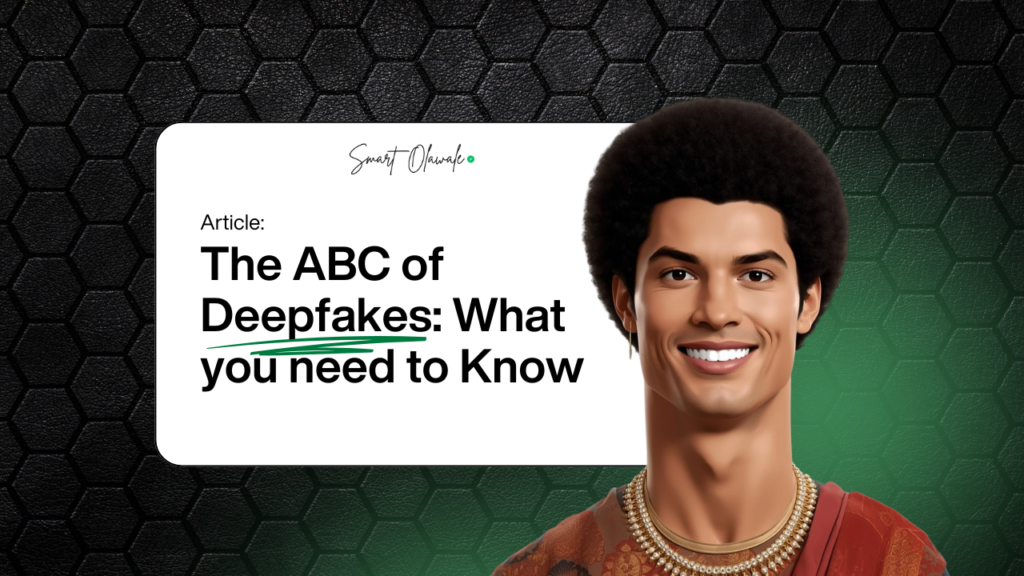
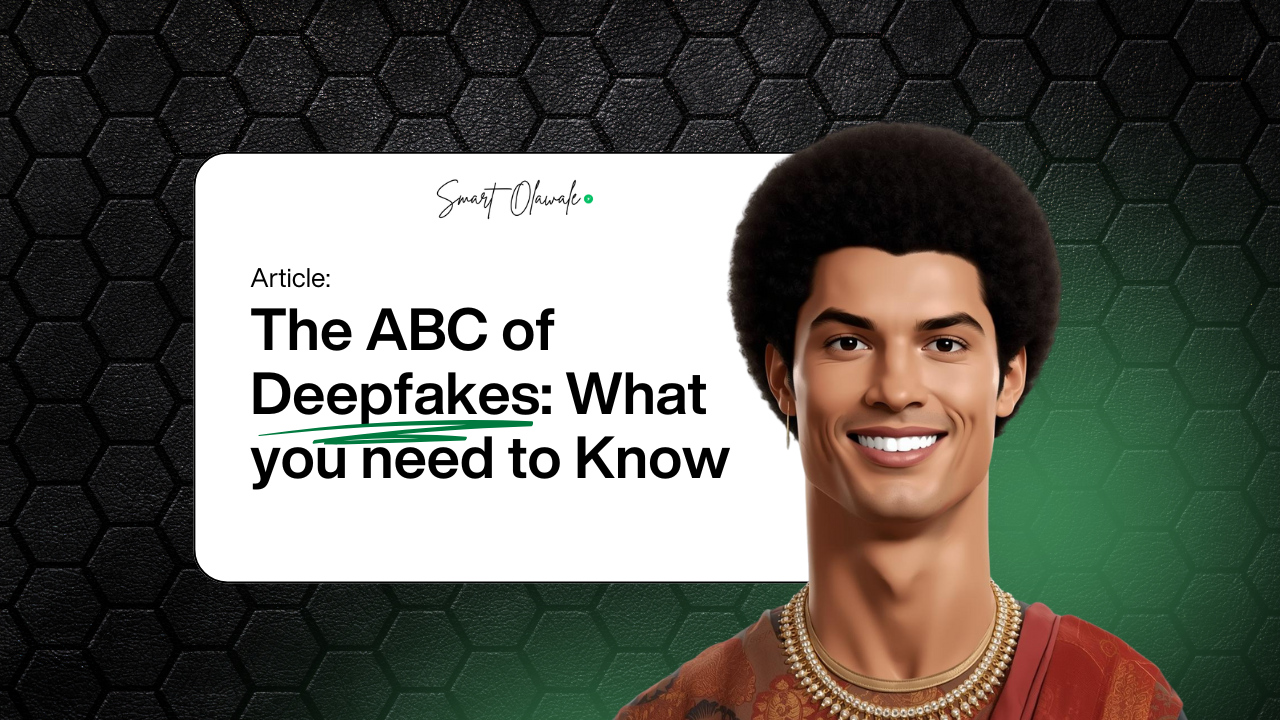
Before becoming the U.S. president again, a viral AI-generated image of Donald Trump appeared to show him being arrested and chased by police. The post received widespread criticism and was quickly disclaimed. In contrast, another viral video showed Trump enjoying a football match with legendary Cristiano Ronaldo in the Oval Office. Both of them posted the video on their social media accounts, which received millions of likes, and had cheerful captions. Wait a minute…. Both pieces of content were deepfakes; they never actually happened. Yet, the public reaction to each was very different. Why? To understand this, we first need to answer a simple question: What are deepfakes?
A) What Are Deepfakes and How Are They Created?
Deepfakes are artificial intelligence (AI)–generated images, videos, or audio clips that realistically depict real people performing actions or expressing characteristics that never actually occurred. Creating a deepfake can be as simple as asking an AI to replace a car in your photo with a private jet, complete with a red carpet and guards, or as complex as digitally bringing a deceased actor to life in a film using CGI and stand-ins.
Deepfakes are not magic; they are the product of deliberate technical processes. Traditionally, they are created using Generative Adversarial Networks (GANs), which involve two AI models: the Generator and the Discriminator. The Generator generates synthetic content, while the Discriminator attempts to distinguish it as real or fake. Through repeated training, both models improve, with the Generator learning to produce increasingly realistic outputs.
A more advanced approach is the diffusion model, where AI is trained on millions of manipulated images. The AI learns to identify and correct these manipulations, gradually mastering human-like features and characteristics, and can then generate highly realistic images or videos from simple text prompts.
B) What Are They Used For and Their Impact?
Deepfakes are not inherently harmful. Originally, deepfakes were developed to support scientific research and generate synthetic data. They can also be used for entertainment, humour, and creative expression (like some instagram account you see these days). For example, the Trump–Ronaldo deepfake was purely for amusement. There are now many tools that let anyone create deepfakes, such as DeepfakesWeb.com.
However, their misuse has grown. Deepfakes can spread misinformation, eroding trust in media and public figures. Research shows they can cause social harm, including psychological effects. Deepfakes have also been used to produce non-consensual pornography and to commit fraud, prompting urgent calls for awareness and detection methods.
C) The Future of Deepfakes: What You Should Know
Deepfakes are likely here to stay, just like AI itself. Unfortunately, detecting them will become increasingly difficult as creators improve their techniques. Experts have discourage outright censorship, and have been emphasising disclosure; so that’s a bit of goodnews, because you can expect complaint brands and creators to tell you that their contents involved AI creation process. Whether there is transparency or accountability in this regards, is a topic for another day.
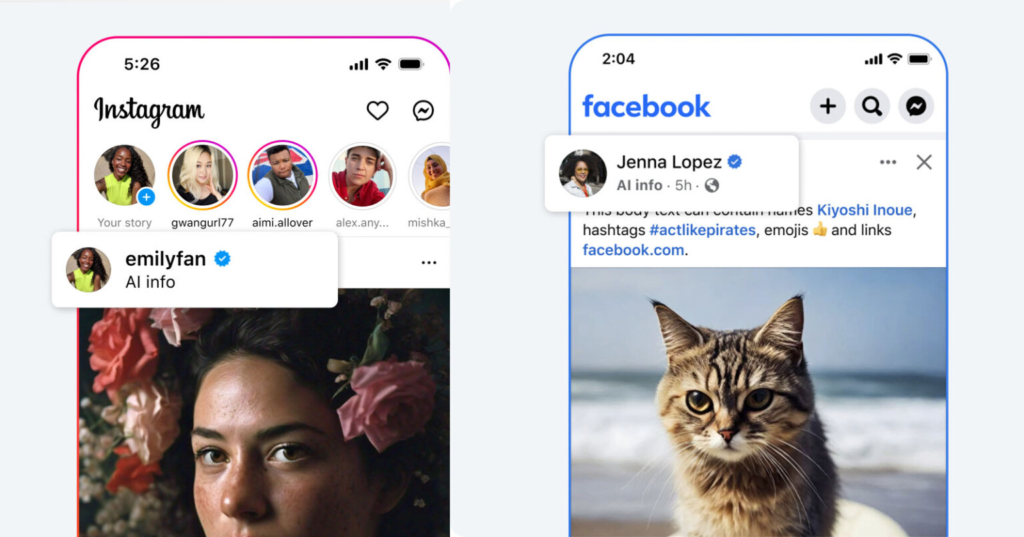
So, what should you know in detecting whether a content is AI-generated or not?
Firstly, don’t overestimate your abilities. Research has shown that people often overestimate their ability to spot deepfakes, even when incentivised to do so, they fail again and again. Approach with caution.
Secondly, be aware that deepfake content is proliferating, so keep questioning. As a consumer, you should question what you see. Familiar faces and realistic visuals do not guarantee authenticity.
The MIT Media Lab suggests asking questions such as:
Who shared this content?
Where did it originate?
What is the page or channel history?
Investigating these factors can help you determine whether a video or image is genuine.
References & Further Reading
BBC News. (2024). How deepfakes are used in film, social media and entertainment. https://www.bbc.co.uk/news/world-us-canada-65069316
BBC News. (2024). AI deepfakes and political misinformation in the UK. https://www.bbc.co.uk/news/uk-68146053
BBC Newsround. (2024). What are deepfakes and how can you spot them? https://www.bbc.co.uk/newsround/69009887
Centre for Data Ethics and Innovation. (2024). Behind the deepfake: 8% create; 90% concerned — Surveying public exposure to and perceptions of deepfakes in the UK. Alan Turing Institute. https://www.turing.ac.uk/sites/default/files/2024-07/behind_the_deepfake_full_publication.pdf
DeepfakesWeb. (2026). Create your own deepfakes. https://deepfakesweb.com
DeepfakesWeb. (n.d.). DeepfakesWeb YouTube channel. https://www.youtube.com/@DeepfakesWeb
The Guardian. (2024, June 7). How to spot a deepfake. https://www.theguardian.com/us-news/article/2024/jun/07/how-to-spot-a-deepfake
Hancock, J. T., Naaman, M., & Levy, K. (2021). AI-mediated communication: Deepfakes, disinformation, and trust. Cell, 184(9), 2170–2176. https://www.sciencedirect.com/science/article/pii/S2589004221013353
Lundberg, J., & Mozelius, P. (2025). To ban or not to ban: Deepfakes, regulation and disclosure. AI & Society. https://link.springer.com/content/pdf/10.1007/s00146-024-02072-1.pdf
MIT Media Lab. (n.d.). Detect Fakes: How to question digital media. https://www.media.mit.edu/projects/detect-fakes/overview/
Swatton, A., & LeBlanc, J. (2024). What are deepfakes and how can we detect them? Alan Turing Institute Blog. https://www.turing.ac.uk/blog/what-are-deepfakes-and-how-can-we-detect-them
University of Queensland. (2021). The rise of deepfakes. QUT ePrints. https://eprints.qut.edu.au/207369/2/The_Rise_of_Deepfakes_ePrints_.pdf